How to Design Tropical Gardens with Structure, Texture, and Drama
A Garden That Feels Like an Escape
There’s something magnetic about a tropical garden. The bold forms, the overlapping foliage, the sense of abundance – everything feels vibrant and alive. Done well, tropical-style planting doesn’t just suggest another place… it transforms yours.
In Auckland’s climate, where warmth and humidity support a wide range of subtropical species, it’s entirely possible to create a tropical retreat that feels luxurious, immersive, and deeply personal – without ever leaving home.
At Sculpt Gardens, we approach tropical garden design as a curated experience. It’s not about over-planting or chasing flowers – it’s about composing a space where form, texture, and scale create drama, intimacy, and a sense of escape.
1. Start with Structure: Design in Layers
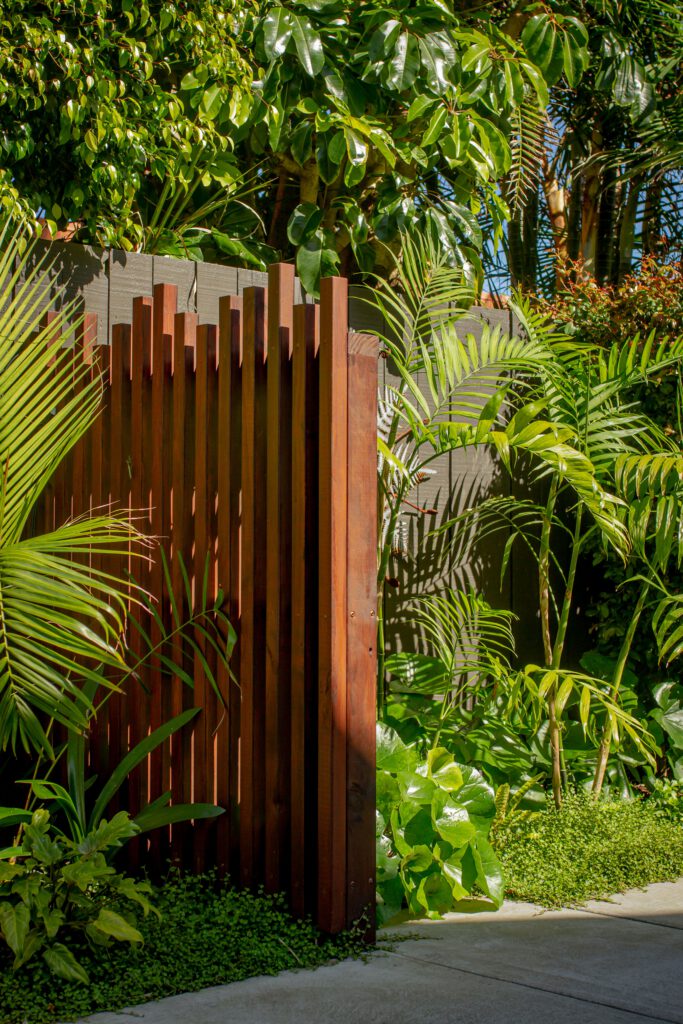
A refined tropical garden isn’t wild—it’s layered. Begin by thinking vertically. Start with tall canopy trees or palms to establish height, then work down through focal “hero” plants, medium-sized fillers, and finally low-growing groundcovers. This intentional layering builds complexity and depth.
Auckland-friendly structure palette:
- Canopy: Nikau palms, clumping bamboos, Dypsis baronii, native tree ferns
- Focal statement plants: Bird of Paradise, Cycad revoluta, Bromeliad ‘Alcantara Rubra’
- Mid-tier fillers: Cordyline, Hibiscus, Philodendron ‘Xanadu’, Frangipani
- Ground layers: Mondo grass, Clivia, bromeliads, native ferns, Liriope
- Climbers: Tecomanthe speciosa, Bougainvillea, Mexican flame vine
Tip: Contrast lushness with restraint. Allow space around hero plants so they can breathe – and be admired.
2. Curate Texture and Form, Not Just Flowers
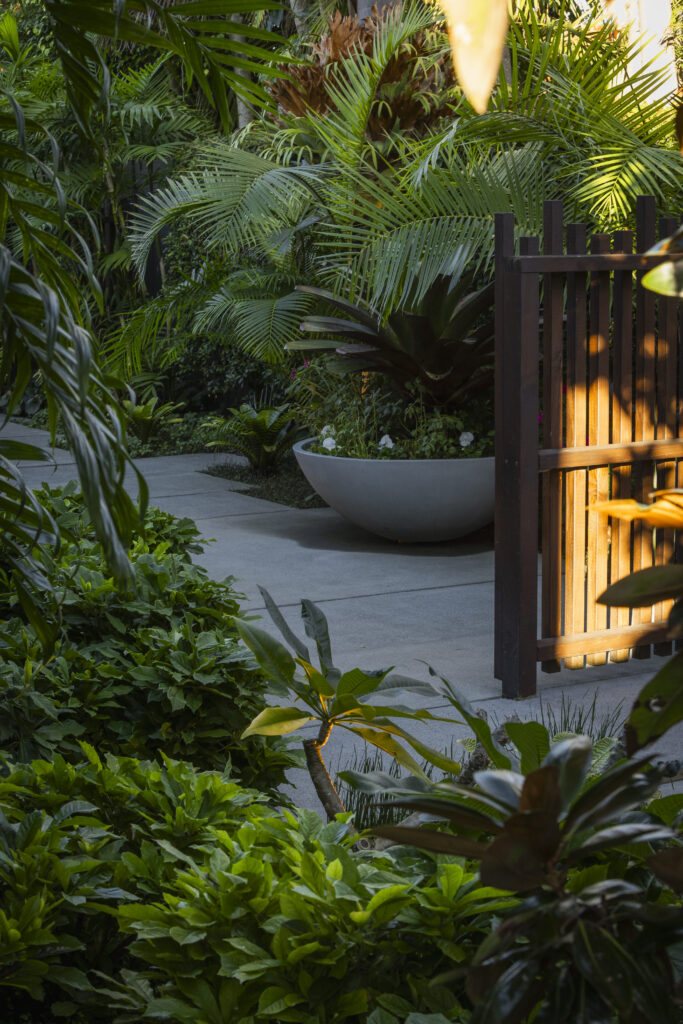
The drama in a tropical garden comes from foliage – size, shape, finish, and contrast. Glossy banana leaves, sculptural ginger, and the serrated rhythm of palms create a richness that flowers alone can’t achieve.
Play with Contrast
- Pair bold, paddle-shaped leaves with finely textured ferns
- Layer upright forms beside trailing groundcovers
- Use reflective foliage (like Astelia or Griselinia lucida) to bounce light into shadier areas
3. Shape Through Repetition
To avoid visual chaos, repetition is key. Group plants in odd numbers – three, five or seven – to create cohesion and rhythm. Repeat leaf shapes and colours at intervals throughout the garden to tie the space together.
Plant for the long view: Stand at key vantage points (like your patio or kitchen window) and position key specimens where they’ll have the most impact.
4. Design with Drama in Mind
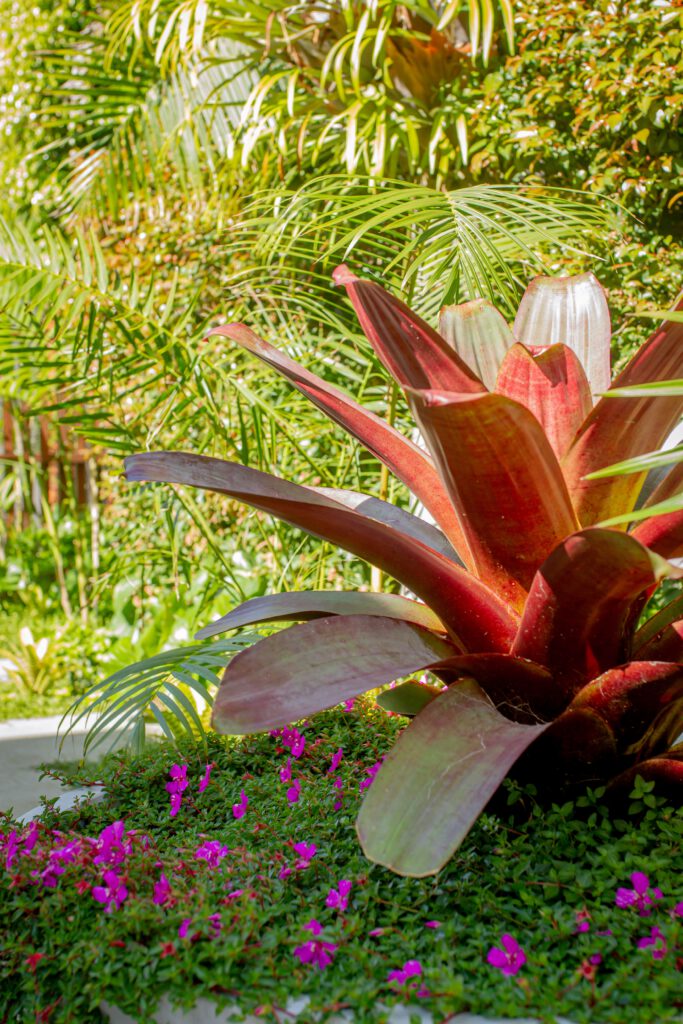
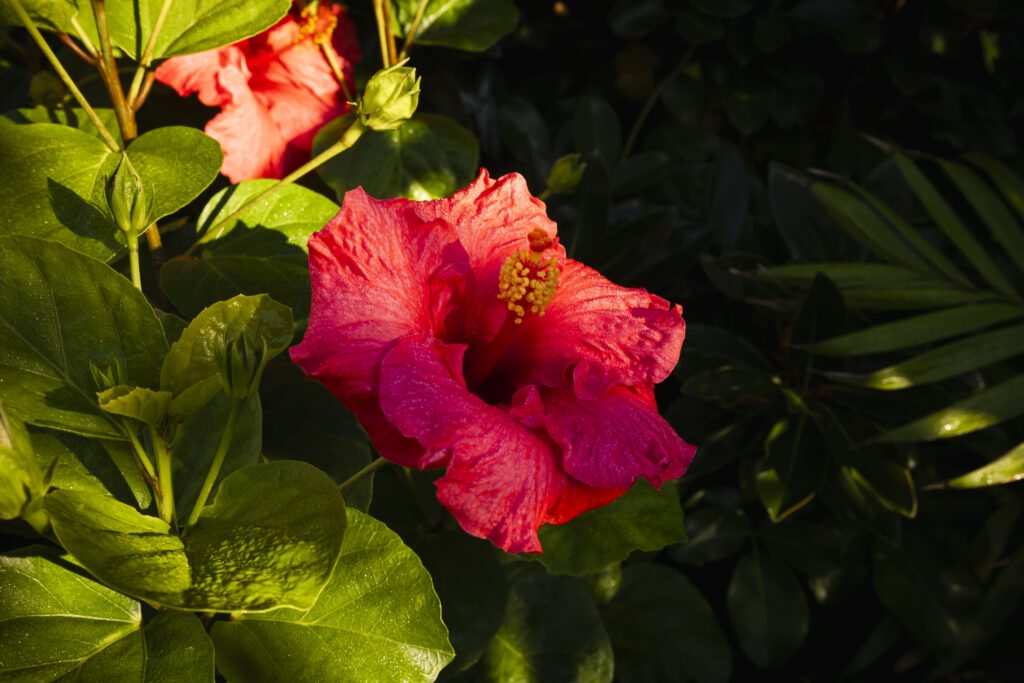
Introduce moments of surprise – a cluster of sculptural bromeliads near a pathway, a specimen philodendron framed by uplighting, or a pop of crimson hibiscus beneath a green canopy.
Use triangular or zigzag placement to break symmetry and guide the eye naturally through the space.
5. Water as a Signature Element
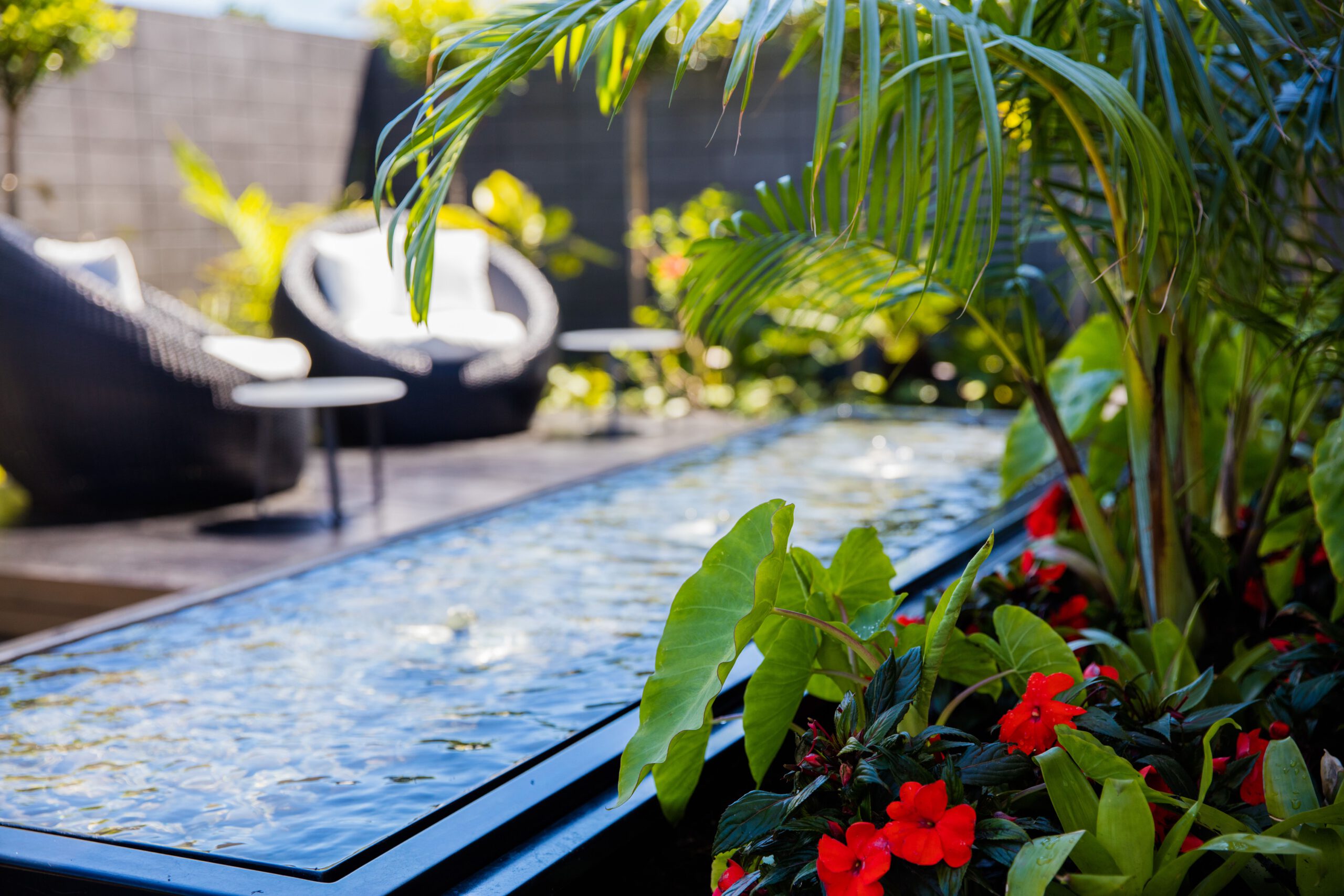
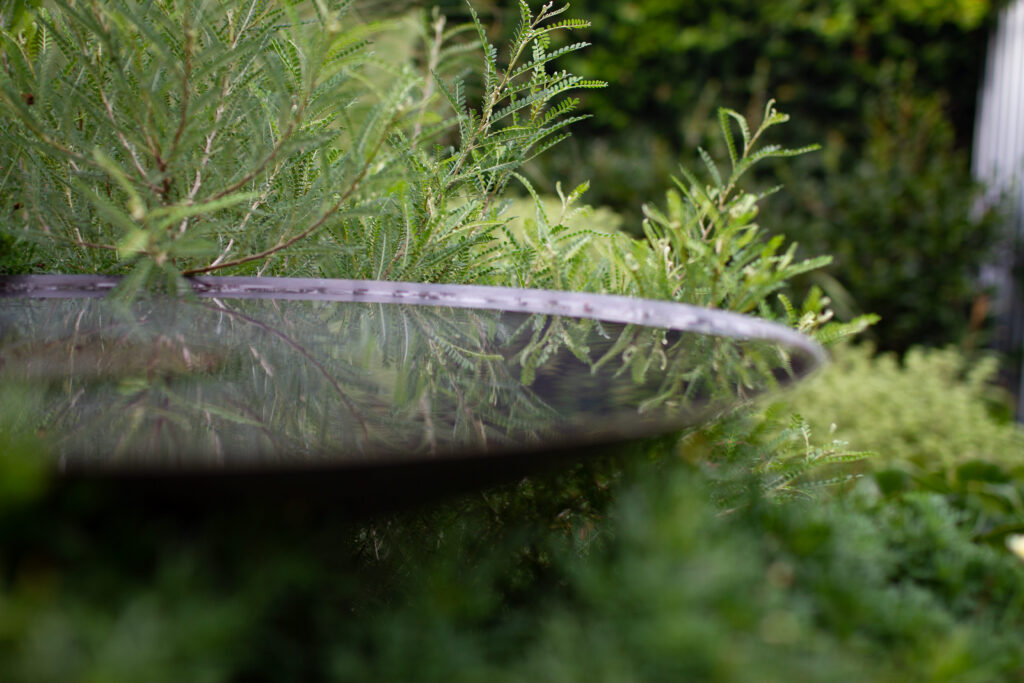
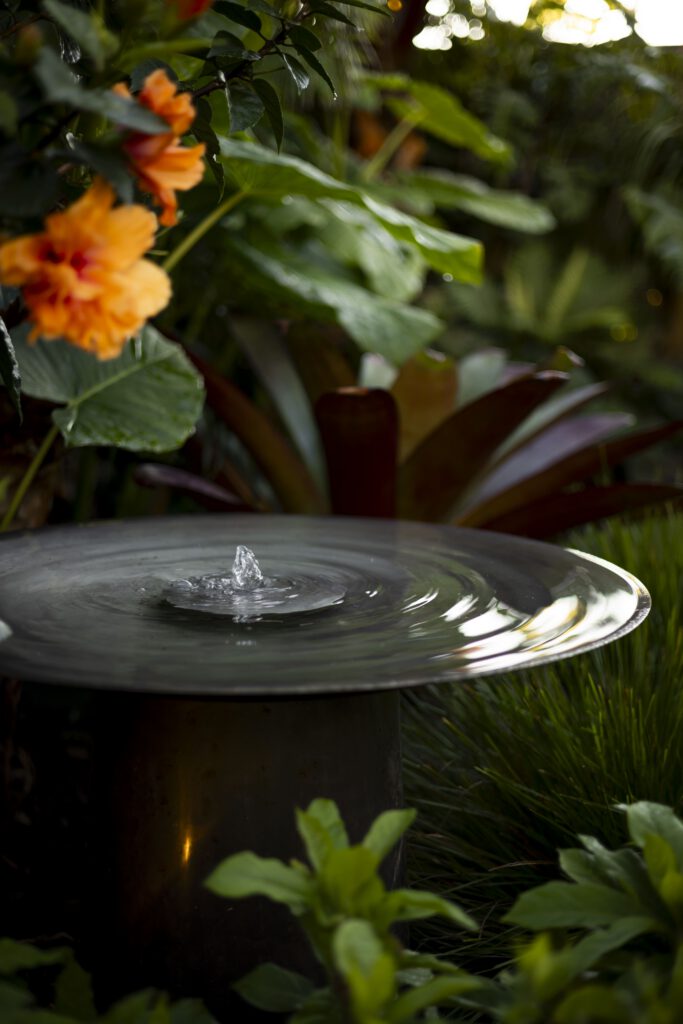
Water adds life to a tropical garden – visually and sensorially. The sound of trickling water or the shimmer of a still surface deepens the experience of the space. Whether it’s a discreet ripple dish, or a reflecting pond, incorporating water elevates the design and reinforces the tropical atmosphere.
6. Embrace Colour but with Intention
Tropical gardens give you permission to be bold – but bold doesn’t mean messy. Choose a base palette of foliage greens, then add curated bursts of colour: coral, magenta, yellow, tangerine. Use flowering plants like hibiscus, canna lilies, and bromeliads to accent key areas – not overwhelm them.
7. Lighting for Lush Evenings
A well-designed tropical garden deserves to be enjoyed after dark. Uplight palms or tree ferns to create moody shadows. Use warm downlighting to highlight sculptural foliage or textured trunks. Concealed LED strips can wash paths or water features in soft light, creating a resort-like ambience.
8. Soil, Feeding and Watering
Tropical plants are fast-growing and nutrient-hungry. Enrich the soil with organic matter and compost, then follow up with regular applications of organic liquid fertiliser.
While your garden is still young and establishing itself, install a drip irrigation system or timer-controlled watering to ensure consistent moisture during warmer months. And always mulch – generously. It helps retain moisture, suppress weeds, and frames your plants with a clean, finished look.
9. Maintenance: From Chaos to Composed
Tropical gardens do need upkeep – but the results are worth it.
- Trim decaying foliage regularly to maintain a fresh look
- Cut back plants after flowering
- Prune to retain structure and keep pathways open
- Remove spent palm fronds before they become unsightly
Ready to Create Your Tropical Oasis?
A tropical garden, when designed with intention and expertise, offers so much more than greenery. It becomes a sensory experience, a private resort, and a reflection of the kind of life you want to lead – vibrant, relaxed, and full of beauty.
Let’s design a garden you’ll be proud to share and love to escape into.
Book a consultation with our design team and start crafting your own luxurious tropical retreat.