How to design a native garden that belongs to Aotearoa
A Place to Belong
A true garden isn’t just beautiful – it feels right. It speaks of place, climate, and the quiet presence of the land itself. In Aotearoa, one of the most rewarding ways to achieve this is through planting with New Zealand natives.
Whether you’re shaping a lush urban retreat or curating a coastal haven, native plants offer more than just low-maintenance resilience. Natives bring a quiet sense of place to the garden – responding naturally to our climate, soils, and seasons. When combined with thoughtful design, they offer a refined, enduring beauty that feels rooted, resilient, and in tune with their surroundings.
Rethink the Native Garden
Native gardens are evolving. Once considered less elegant or purely functional, they’re now celebrated for their quiet beauty, strong structure, and deep connection to place. When designed with intention, New Zealand natives offer more than resilience – they bring atmosphere, structure and a sense of belonging to the landscape.
Today’s native garden isn’t about mimicking the bush, but reimagining it. Natives can anchor the space, while select exotics add seasonal colour, variety, and birdlife support. It’s not about being 100% native – it’s about letting natives lead, with thoughtful companions that enhance their year-round beauty. The result? An Aotearoa centric garden that feels grounded, refined, and unique in place.

Permanent and Momentary Plants
A rich and resilient garden balances both permanent structure and momentary seasonal delight. Long-lived natives give your garden architectural bones – trees and shrubs that endure through decades – while short-term planting adds rhythm, contrast, and renewal.
Gardens are hot spots for diversity. The more diverse and complex your planting scheme, the more life it supports – especially for wild insect pollinators. Studies show that native species are strongly preferred by many pollinators if they can do the job. So why not let them?Let’s aim for a new benchmark: 70% of new planting should be native or edible. This isn’t about being purist – it’s about creating gardens that are ecologically rich, visually captivating, and deeply tied to the land beneath our feet.
5 Design Principles for Modern Native Gardens
1. Start with Structure
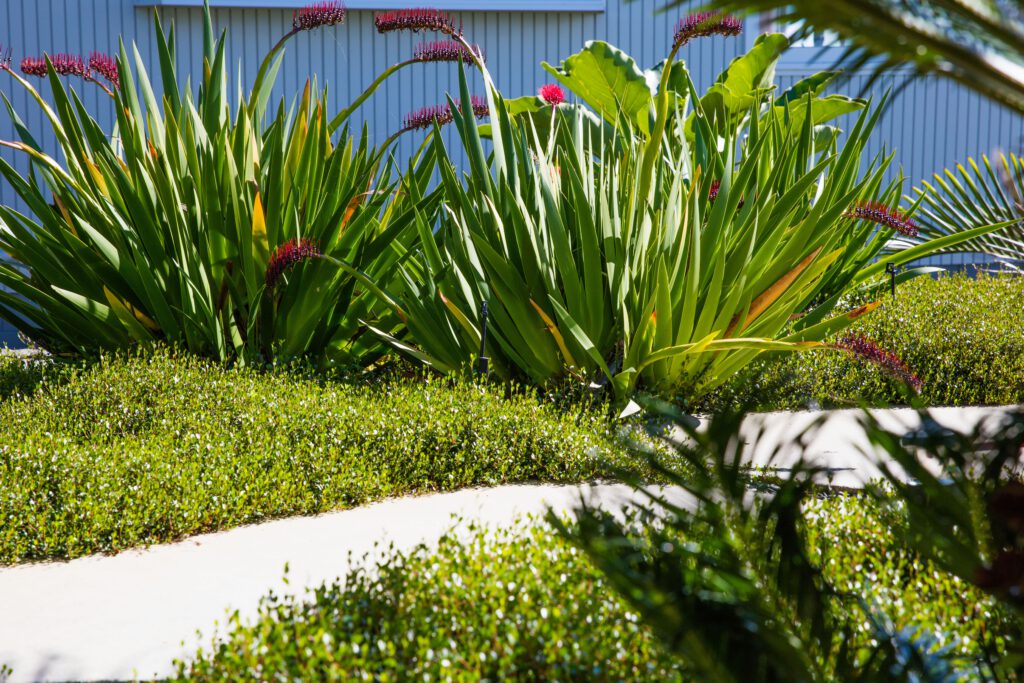
Begin with bold, architectural forms that give your garden year-round interest. Use a framework of canopy trees and structural evergreens to provide rhythm and height. Then underplant with lush foliage, soft grasses and ground-hugging species that fill the gaps naturally.
Try this palette:
- Canopy: Pūriri, Nikau Palm, or Kohekohe
- Mid-layer: Pseudopanax or clipped Pittosporum
- Base layer: Libertia, Carex, and fern underplanting
2. Think in Texture, Not Just Colour
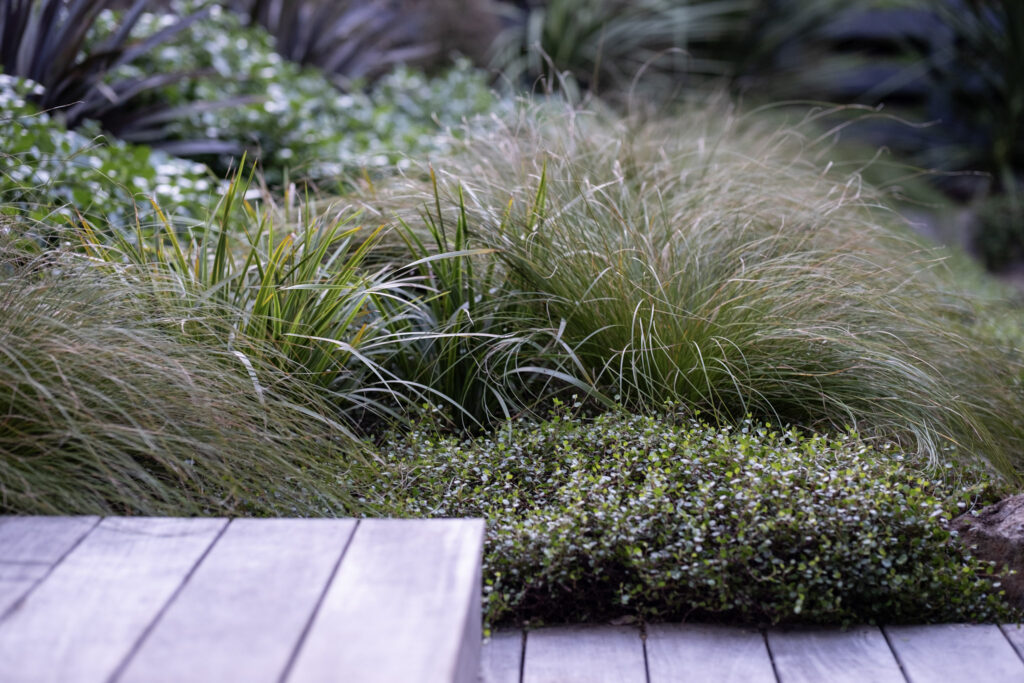
Native plants excel at contrast – fine, feathery grasses beside broad-leafed Puka; sleek Astelia spears rising from mossy groundcovers. Layering textures creates movement and intimacy, especially in small or shaded spaces.
Rather than relying solely on flowers, let texture guide the design: glossy, matte, serrated, leathery, thread-like, upright, cascading.
3. Use Colour with Intention
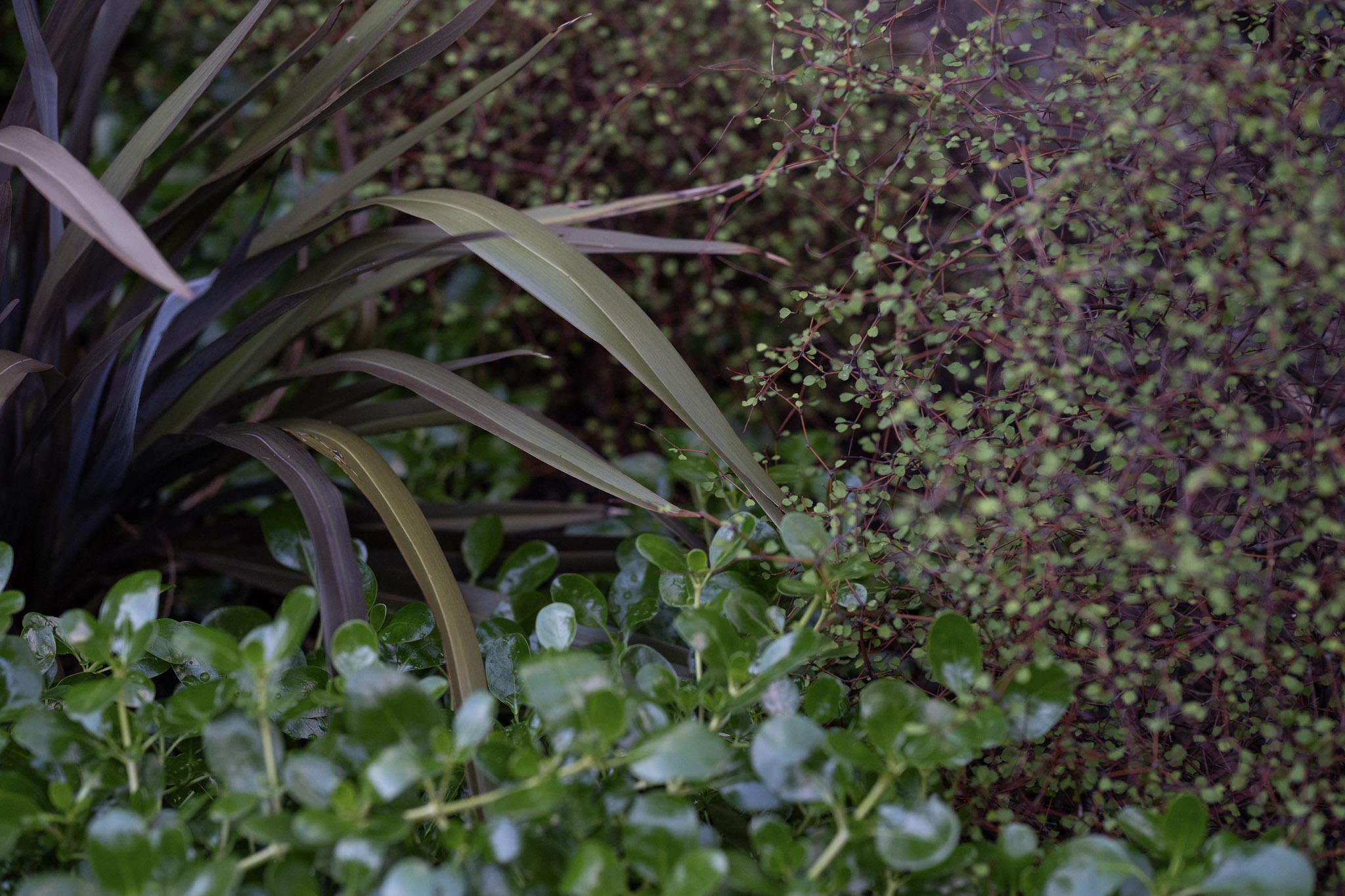
While native gardens tend to lean green, there is a world of colour to play with – especially through foliage. Silvery Astelia chathamica, bronze Phormium, deep purple Cordyline, and golden Libertia peregrinans bring warmth, contrast and energy.
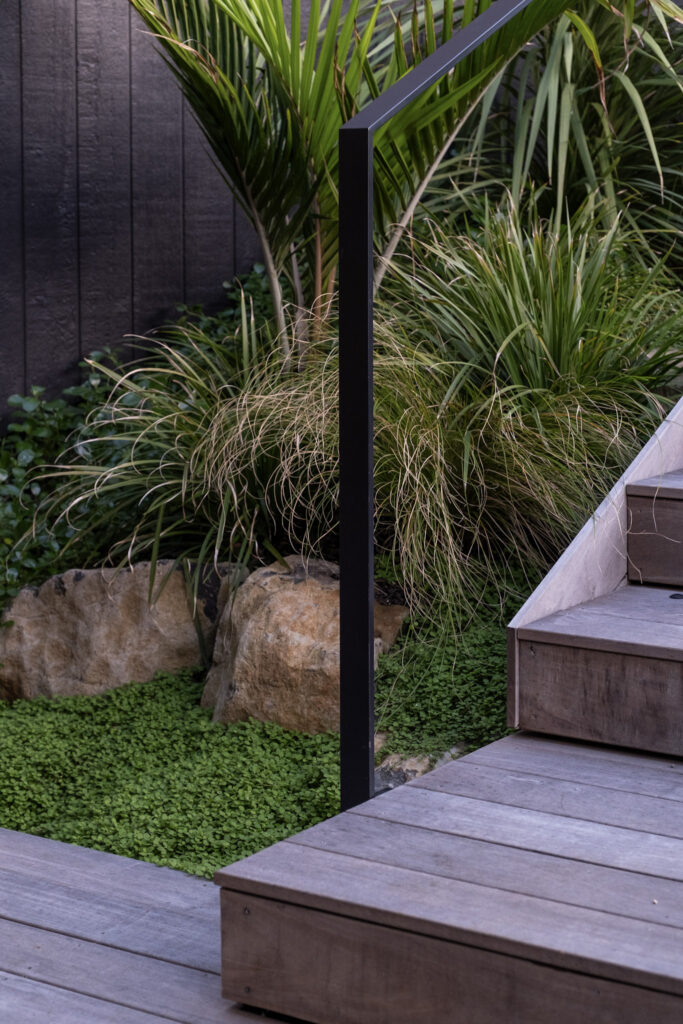
A thoughtful mix of cool and warm tones can anchor the garden to its hardscape – whether that’s timber decking, stone paving, or black steel fencing.
4. Design for the Senses
Birdsong, scent, the texture of bark under your palm – gardens are more than visual. Native trees and shrubs provide nectar, seed and shelter that support tūī, kererū, bellbirds, and silvereyes. Mānuka and kōwhai, for instance, hum with activity when in bloom.
Planting for ecology doesn’t mean compromising elegance. A flowering flax with tūī diving in and out becomes a living sculpture.
5. Celebrate Local Craft & Story
A native-rich garden is also a beautiful canvas for expression. Woven panels, carvings, sculptures, and stone sourced from your region all sit beautifully within a backdrop of natives.
Why Choose Natives?
A native garden is not simply “less work” – it’s more life.
- Adapted to local climate – less watering, fewer inputs, greater resilience
- Support local biodiversity – essential food and habitat for native birds, insects and lizards
- Low maintenance – many natives are evergreen, reducing seasonal mess
- Subtle luxury – the appeal of a garden that looks natural, not forced
Some of Our Go-To Natives
Feature Trees
- Pōhutukawa ‘Maori Princess’ – upright habit, scarlet blooms in summer
- Kōwhai – yellow flowers that invite tūī and bees
- Nikau Palm – iconic and elegant, perfect for creating vertical focus
- Titoki – glossy foliage and red seeds loved by kererū
Structural Mid-Layer
- Pseudopanax lessonii – glossy, green, leathery foliage
- Pseudopanax lessonii ‘Purpurea’ – colour and form in one
- Muehlenbeckia astonii – creates a thick screen
Textural Fillers
- Carex testacea – low mounding grass with copper tones
- Libertia ixioides – golden strappy foliage and small white flowers
- Coprosma ‘Poor Knights’ – large, green glossy leaves
Groundcovers & Ferns
- Muehlenbeckia axillaris – wiry, architectural texture
- Asplenium oblongifolium – ideal for damp, shady areas
- Silver Lady Fern – soft and graceful for contrast
Climbers & Vines
- Clematis paniculata (Puawhananga) – evergreen with masses of white flowers
- Tecomanthe speciosa – showy, trumpet-shaped blooms
From Garden to Sanctuary
A well-designed native garden isn’t just about plants – it’s about creating a sanctuary. One that responds to its location, enriches the ecosystem around it, and offers you moments of peace, curiosity and delight throughout the seasons.
If you’re imagining a garden that feels like a natural extension of your home – and of the land it sits on – we’d love to help you bring it to life.
Book a private consultation with our design team and start your native garden journey with confidence, creativity, and a deep respect for place.